Showing posts with label Jesus. Show all posts

Friday, May 20, 2016

Why Did Jesus Die On The Cross?


This blog seems to increasingly become the place where I answer complex Twitter questions. I got way more than 140 character here. :)

So, I don't believe that the story of Adam and Eve in the garden of Eden is literally true.
And the statement which was put to me was "If there was no sin in the garden by a real Adam, then there is no need for a Saviour". And I guess the question is, why do I believe in Jesus anyway? And what do I believe about his death?

The question why (or if?) Jesus had to die on the cross is a great one, and one I ponder at least once a year - usually just before Easter when Christians relive and retell Jesus' last days on earth.

I guess the person asking the question made the assumption that we all have inherited Adam and Eve's 'original sin' and that Jesus had to be sacrificed in order to put things right with God. Personally speaking, that has never made sense to me. Firstly (as mentioned above) I don't read the story of The Fall as a literal event, and secondly I don't see why a loving all-powerful God can't simply forgive sin without demanding a human sacrifice for it.
However, I can see that the idea of atonement and sacrificing a scapegoat for the sins of others fits into the Old Testament thinking, so perhaps it made more sense in its time and place. Here is an example from Leviticus. Sacrificing animals was quite a thing 4000 years ago.

Today in 21st century Britain is makes a whole less sense.
There are many different theories and theologies about Jesus' death and atonement. Penal substitution is just one of them.
Don't get me wrong, the idea is certainly out there. Even in gentle CofE services have I come across the lyrics "It was my sin that held him there until it was accomplished"...

But this blog isn't about the many different views about Jesus' death. It's about exploring what I believe about Jesus' death. It's a personal view rather than an exploration of the rights and wrongs of others.
So let me introduce Rev Mark Sandlin who I came across recently and whose views I often agree with. He  is an ordained PC(USA) minister serving at Vandalia Presbyterian Church in Greensboro, NC. Mark is a co-founder of The Christian Left and blogs at The God Article and writes for Huffington Post, Sojourners and Patheos.

I love this article of his in particular - God Did Not Kill Jesus On The Cross For Our Sins, and it describes my own views pretty well.
Yes, I believe that Jesus came to restore our relationship with God and to challenge our "sinful ways". He did that by teaching and preaching, but mostly by modelling how we should treat each other, especially those who are powerless and marginalised.
He also did that by challenging those who believed themselves to be godly and in line with God's commandments - the Pharisees and religious leaders - by showing up and criticising their selfish and hypocritical ways.
He did that by taking on the establishment and by making a lot of enemies along the way.
In the end, that is what got him killed. His conviction of how to follow God's ways, how to build 'God's Kingdom' on earth, his determination to preach his message and his tenacity to pursue his purpose even when faced with brutality and death.

And that's why I believe Jesus died. And why I believe it is good and right to follow him, even in 21st century Britain. I believe that it is my duty to stand up for the marginalised  and vulnerable in society. I believe it is my duty to stand up against injustice - even or perhaps especially from the establishment and those in power. I believe that by doing so we have a chance to build a better and fairer world, or - as Jesus put it - build God's Kingdom on earth.

I also, sadly, believe that many of today's churches have gone the same way of the religious leaders which Jesus so criticised - by accumulating wealth and power, by trying to force their views onto other people, and by looking down on the poor and disadvantaged. If Jesus walked our streets today, he'd surely be turning tables over!

So there's my answer. I don't believe Jesus died to pay for my short comings and mistakes. Or Adam's or Eve's or anybody's. I believe that he died as a result of trying to show us a better way. The least I can do is try to follow his way as best as I can. And perhaps be less afraid of the consequences.


Sunday, January 3, 2016

"Why do you believe [in God]?"

"Why do you believe?" - That was the question I was asked early on Sunday morning and I have been mulling it over for the last 8 hours.

Why do I believe in God?
I suppose the simplest answer is because I have believed in God for as long as I can remember and I cannot imagine not believing in God.
Those who know me, know that I am not adversed to questioning and scrutinising religious teaching, scripture and authority. I do it all the time. It's my questions, my doubts and my criticisms which shape my faith.
But never, not in my darkest moments or times of doubt have I not believed in God.God simply is part of my life.

In my mind seeking God is deeply ingrained into the human psyche, whether we are religious or not, or believe in God or not. Perhaps we call that seeking by different names.
I know that I can only speak from my own perception and experience, so forgive me if I do, but I sometimes wonder how atheists can deny that God-shaped hole in their lives. The only way I can imagine it being denied is, well, by denial.
(I am sure many of my atheist friends will disagree. And that's okay. I'll probably hear about it.) :)

To any who at this stage feel inclined to say "So you believe in God. That's fine ... but which of the thousands of G/gods out there??" I would reply that I don't think it matters all that much. Religions are simply human attempts to put the concept of God into human words.
Different religions seem to emphasize different attributes of G/god(s) and at the same time share many similarities.
But outside of all those human concepts G/god(s) does exist or not. Regardless of what we believe about him/her/them (or not).


Why then am I a Christian?
I am sure much is to do with culture and familiarity. If I was born in Afghanistan I'd be more likely a Muslim, if in India a Hindu. It just so happens that I was born in Europe into a Roman Catholic family.

I think my criticism of Christian doctrine may put me on the periphery of Christianity. I quite like the words of Richard Rohr who calls it "being on the edge of the inside". That sounds like a good place to me!
Occasionally people have said to me that I am deist, not a Christian.
I disagree.
Despite being on the edge of the inside, I feel quite firmly part of the Christian faith. Perhaps it's the person of Jesus that keeps me there. Jesus, who said "If you have seen me, you have seen the Father" and "I am in my Father, and you in me, and I in you" leaves me believing that his teachings, words and example are worth reading, mulling over and putting into practice.

By that I don't mean blindly following what others tell me. Quite the contrary. It requires me to dig deep and search for myself what it means to "be like Jesus" in this world here and now, wherever I go and whoever I meet.
I know how Jesus' teachings fitted into first century Palestine because the gospel writers left their records.
And I know from Paul's letters how he felt it should be applied as he travelled to other countries and engaged with other cultures.

One of the beauties of the Christin faith is that we believe that we are all flawed and prone to make mistakes. And that gives me the right, or even the responsibility, to scrutinise what others think and say about my faith. And to discern for myself whether they are right or wrong.
The gospel writers and Paul are not here to live according to Jesus' teachings in secular Britain in the 21st century. But I am!

So yes, I do believe that one day I will meet God and that I will account for the things I said (and didn't say) and that things I did (and didn't do), as well as my thoughts and attitudes towards others.
And it won't do any good to say "I did these things because my pastor or vicar or imam or guru or teacher or parent or husband etc told me so".
It will be down to me, and me alone.

Will I always be a Christian? It may be arrogant to claim that I will, although I cannot imagine ever not to be.
But wherever my faith journey takes me, I don't think I can ever be an atheist and not believe that God is here.


There you have it, @hellboy2112. I don't know if it answered your question, but it has passed a rainy Sunday.
Much love. :)

Saturday, April 4, 2015

Non-dualism and social media

Once in a while I love to take time out from the daily grind to make time to go within myself, ponder, search and see what I can find. For me, Lent, Ramadan and Advent offer convenient opportunities to do just that.

This year I took Holy Week off. I had some annual leave remaining, which needed to be taken before the end of March, and the last week before Easter seemed a good time for some soul-searching.
And while I was in the mood, I decided to take some time off from social media too - one of my greatest distractions.

It so happened that during this week I met two men who had quite an influence on me, and who might just turn out to nudge me into a new direction.

The first one was Judas Ischariot.
I had agreed to take part in a reflective church service on Monday evening, one in which each of us read/played the part of one of the six characters from Stephen Cottrell's book 'The Nail' - Peter, the Centurion, Pilate, Caiaphas, Judas and Mary Magdalen.

As soon as I read the parts, I knew Judas was for me. I loved Cottrell's Judas. He was a man of conviction, a man with political hopes and dreams. He wanted the best for his people - freedom from the Roman occupation and from oppressive religious leaders. He wanted political change and his frustration grew when Jesus, the man he believed had what it took to bring that political change, did not live up to his expectations.
Judas, who was so sure that his way was the right one that he took drastic action in the desire to make it happen.

"It is not more love this world needs, but change, leadership, action!" is what he said.

Judas reminded me of some zealous political activists I have met over the last year or so, some who are convinced that the end justifies the means - no matter how drastic.
Judas also reminded me of myself, when I am blinkered and unable to see the other side, take the wider view or stand in the shoes of the other.
I loved Judas. So human, so misguided, so unable to see beyond his own small mind. So much like all of us!
Playing Judas made me cry, and it made others cry too.


Life is complicated and I think it is in our human nature to try and simplify it by taking a black-and-white approach. Much easier to see things as black or white; right or wrong; good or bad - definitely much easier than delving into the intricacies and complications of the finer details and underlying factors.
I'm not usually a very black-and-white kind of person. My world tends to be in shades of grey (perhaps even more than 50) ... although I sometimes secretly envy the black-and-white types, because I think their lives must be easier and less complicated.

But I am reminded that when I step away from the right-or-wrong thinking, I almost inevitably learn new things and gain new insights.
For example, any hardened views I might have had about issues like sexuality, abortion or assisted suicide were impossible to sustain and either crumbled completely or at least softened, when I allowed myself to see the other side, hear the stories, walk in the footsteps of another.

And I like it that way!
Easy answers are often, well, just too easy. Too simplistic!
I prefer the answer being "There is no definite answer".


Cue to introduce Richard Rohr, the other man I met this week. Richard is a Franciscan monk from the US, who describes his Christian stance as "being on the edge of the inside". That's a good place to be.
From Richard I learned a name for the thing I have been feeling for a long time - non-dualism.

Social media in particular is full of dualistic thinking. And it's so easy to fall into it ourselves. So easy to share that simplistic meme, because it is pithy and witty - without querying or challenging its validity and truth.
So easy to join the crowds which declare that...
... atheists are immoral.
... Muslims are terrorists.
... theists are stupid and incapable of rational thought.
... Tories are heartless selfish toffs.
... liberals are lefty pinko communists.
... men are sexist.
... feminists are lesbians.
... gays want to convert us all to homosexuality.
... Catholic priests are pedophiles.
... etc, etc...

Even as I write this list, it becomes easier and easier to go down that road of outrageous, unreasonable and spiteful statements.

Non-dualism - as I understand it so far - encourages us to take a situation, an event, a moment as it is; to consciously try to not give it a label and make a judgement - at least not straight away.
We love to compartmentalise. Are you right or wrong; good or bad; a friend or an enemy? Are you on my side or against me?
What if it is a whole lot more complicated than that?
What if you can even love Judas? Understand his motivations and desires? And empathise?


Where does all that leave me with my involvement in social media? I honestly don't know.
I know that I am tired of being exposed to angry and often hateful tweets and memes.
I know that having taken some time out has been refreshing, almost healing.
I may have to change how I use social media.
I may have to lose a whole bunch of friends and followers.

Perhaps I should be non-dualistic about this and give myself some time to consider it.

For those of you wanting to hear about Richard Rohr and have two hours spare, can listen to his interview here.


Monday, March 9, 2015

12 years a Christian


Today is an anniversary for me - 12 years since I became a committed and practising Christian. I had been raised in a Roman Catholic family, but hadn't given religion an awful lot of thought since leaving home in my late teens.
I had met a life partner, had children, bought a house, gotten married (in that order) without religion in my life.
I had probably always believed in some greater being or force, but had not given it a name.
I had dabbled with paganism (I loved nature and the seasons, still do), flirted with Hinduism (I enjoyed Yoga, still do) and set foot inside a church once in a blue moon (I liked the peace and serenity, still do).

Then, in my mid-thirties, I had a conversion experience. One evening. Alone. In my kitchen.
It was a very personal and precious moment, so I am not going to blog about that. But I want to reflect on the last 12 years.

I started going to a lively evangelical free church - 'Bible-believing', 'spirit-filled', with energetic worship and long sermons. It took a pretty literal interpretation of scripture. Creationism wasn't openly mentioned, but seemed to be covertly implied; homosexuality was frowned upon (in the 'Hate the sin, but love the sinner' kind of way); women had an inferior role to their husbands.
I was never comfortable with those things, but for a long time felt I could hold that tension and accommodate the differences.

In the end it wasn't the differences in opinion which drew me away, but the fact that having different opinions was discouraged. If one had a question, there was only one answer - that of the pastor/leadership.

I can't function like that. In fact, the worst thing you can do is to tell me what I can/cannot believe.
Atheist friends have taught me that our convictions can only be our own. We hold them, we own them and - if we are honest with ourselves - we review them regularly.

I demand for myself an immense level of freedom. The freedom to mull things over and choose for myself my very personal path.
Some call that cherry picking. I call that being true to myself! :)

I find beauty and meaning in all sorts of religious and non-religious traditions, practices and ideas.
I have found a home (for now at least) in the Church of England in a church where nobody tells me what I can and cannot do, where I am respected and appreciated as I am and where the congregation is very active in social justice and in the local community.

Has becoming a Christian made me a different person? Yes and no.
Many of my values have always been there.
Genetically determined?
Implanted during childhood?
Willed by God?
Who knows.

But I find that my faith crystallises certain values out for me and has become a permanent framework to remind me to strive to be a better person. And yes, I believe to strive to become the person God wants me to be.
Principles like forgiveness, perseverance, grace and patience are things which my faith constantly calls me to do.
To not give in to bitterness, anger and cynicism.
To hold onto hope and trust and love. To believe in a better world and our (god-given) ability to build it.

My faith has changed over the years and it will no doubt continue to change. It seems to mature and become clearer and sharper. The more questions I ask and the more difficult conversations I have, the more I understand what it is I believe and why. The more comfortable I also become in being clear and honest about the many things I don't understand.

Despite it's tricky connotations, I have always found the description 'being born again' quite accurate.
Choosing to become a Christian and essentially follow the teachings of Jesus was a fresh beginning and a commitment for me. And one I have not regretted in 12 years.
If you are one of those people who have honed and sharpened my faith, I thank you for your companionship.

Whether you are a Christian or a follower of any other faith or none, I am glad to know you.

Sunday, January 19, 2014

Come and see!


Today in church we read the following passage from John's gospel
The next day John again was standing with two of his disciples, and as he watched Jesus walk by, he exclaimed, ‘Look, here is the Lamb of God!’ The two disciples heard him say this, and they followed Jesus. When Jesus turned and saw them following, he said to them, ‘What are you looking for?’ They said to him, ‘Rabbi’ (which translated means Teacher), ‘where are you staying?’ He said to them, ‘Come and see.’ They came and saw where he was staying, and they remained with him that day. It was about four o’clock in the afternoon. One of the two who heard John speak and followed him was Andrew, Simon Peter’s brother. He first found his brother Simon and said to him, ‘We have found the Messiah’ (which is translated Anointed). He brought Simon to Jesus, who looked at him and said, ‘You are Simon son of John. You are to be called Cephas’ (which is translated Peter). - John 1:35-42 
I am struck by the words of Jesus: "What are you looking for?" and "Come and see".

What am I looking for in my faith? And have I been looking right?
I often feel that I want to be and do so many things in church and live my faith in that way ... but what about looking much closer to home and seeing the small things in my daily life - my own family, my work? What about living my faith there in everyday situations, rather than looking elsewhere beyond?

Today I took my camera and went for a walk. 
These are the things I found when I looked closer and took in the detail.

"Come and see!"


Tuesday, December 24, 2013

Twelve days at Christmas

This will be my project over the Christmas period. One nativity figure every day.


Day 1:

"Do not be afraid, Mary, for you have found favour with God. And now, you will conceive in your womb and bear a son, and you will name him Jesus.”


Day 2:

And she gave birth to her firstborn son and wrapped him in bands of cloth, and laid him in a manger, because there was no place for them in the inn.


Day 3:

 “Joseph, son of David, do not be afraid to take Mary as your wife.”


Day 4:

Then an angel of the Lord stood before them, and the glory of the Lord shone around them.


Day 5:

“Do not be afraid; for see—I am bringing you good news of great joy for all the people”


Day 6:

“Let us go now to Bethlehem and see this thing that has taken place, which the Lord has made known to us.”


 Day 7:

So they went with haste ...


Day 8:

… and found ...


Day 9:

 
... Mary and Joseph, and the child lying in the manger.


Day 10:

Wise men from the East came to Jerusalem, asking, ‘Where is the child who has been born king of the Jews? For we observed his star at its rising, and have come to pay him homage.


Day 11:

And there, ahead of them, went the star that they had seen at its rising, until it stopped over the place where the child was.


Day 12:

When they saw that the star had stopped, they were overwhelmed with joy.


The last day of Christmas:

On entering the house, they saw the child with Mary his mother; and they knelt down and paid him homage.


Thank you to all of you who have walked the Christmas journey with me.

Friday, August 9, 2013

My faith


I have worn a silver chain with a small silver cross for a long time.
Earlier this year I found a little peace symbol in the street and added it to my chain. It isn't real silver and is now looking worn - but that doesn't matter.
Then my daughter gave my a little glass heart pendant and I put it on my chain.
And on holiday in Germany recently I found a little pebble with a handy hole lying along the river Rhein. I hung that on my chain too.

Each symbol represents an important part of my faith.
The cross , of course, symbolises Christianity and my faith in Jesus Christ.
The peace symbol represents peace. The heart love. And the little rock foundation and belonging.

And there you have it.

FAITH = PEACE + LOVE + BELONGING

I wonder what other symbol I will find and add to my little silver chain of faith?

Sunday, March 31, 2013

He is risen! Alleluja!


Today, on Easter Sunday, we heard one of my favourite Bible passages.
Mary Magdalen meets the resurrected Christ.
I love the tenderness and intimacy of this encounter.

But Mary stood weeping outside the tomb. As she wept, she bent over to look into the tomb; and she saw two angels in white, sitting where the body of Jesus had been lying, one at the head and the other at the feet.
They said to her, ‘Woman, why are you weeping?’ She said to them, ‘They have taken away my Lord, and I do not know where they have laid him.’ 

When she had said this, she turned round and saw Jesus standing there, but she did not know that it was Jesus. Jesus said to her, ‘Woman, why are you weeping? For whom are you looking?’ Supposing him to be the gardener, she said to him, ‘Sir, if you have carried him away, tell me where you have laid him, and I will take him away.’

Jesus said to her, ‘Mary!’ She turned and said to him in Hebrew, ‘Rabbouni!’ (which means Teacher).
Jesus said to her, ‘Do not hold on to me, because I have not yet ascended to the Father. But go to my brothers and say to them, “I am ascending to my Father and your Father, to my God and your God.” ’ Mary Magdalene went and announced to the disciples, ‘I have seen the Lord’; and she told them that he had said these things to her."
(Luke 20:11-18)

Thursday, March 28, 2013

Holy Week

Holy Week is upon us. Tomorrow is Good Friday, the day when Christians remember the cruel death of Jesus.

I have been very busy this week with making Easter crafts for sale. Today was my deadline. Enough. It is finished!
Time to meditate on the final days of Jesus and to let it sink in.

I am looking forward to the Walk of Witness in our town tomorrow, and the Midnight Vigil on Saturday night.

May you experience something of God this Easter weekend. May you find him in the emerging spring flowers, the freezing snow, the joy of chocolate or the suffering of Jesus. You never know where God may show himself!

Sunday, March 10, 2013

Love of God

Today is Mothering Sunday - the day when traditionally domestic servants were given a day off to visit their mother church, usually with their own mothers and other family members. It was a day to return to one's own family and church and spend time with them.

As it happens, today is another significant anniversary for me - 10 years ago on this day I became a committed Christian.

I had a Roman Catholic upbringing, so Christianity was not new to me.
As a teenager I had drifted away from the Christian faith. Not completely. I don't think I ever stopped believing in God. I went to church occasionally - either because it was a special festival or because I felt the need.

As I grew older and life threw more and more responsibilities on me, I became aware of searching for something greater than myself out there; something to draw strength and hope and courage from.
I did not really consider the Christian faith, because as far as I was aware I had 'been there' and 'tried that' ...

So I looked into other religions and dabbled a bit here and there.

Then one late evening, after a rotten day and when I felt very critical of myself and very unlovable, I sat at the table in my kitchen and out of the blue felt a voice speak to me. The voice said simply "I love you".
In my state of self-loathing I did not accept that.
Strangely I felt sure to know who the voice belonged to, because I addressed him in my reply: "Don't tell me you love me, Jesus, I don't believe you!"

I have often wondered about my reply.
Of course Jesus had played a part in my Catholic upbringing. I was taught that he was the Son of God who had died on the cross for our sins ... but somehow I did not remember him to have been described to me as the intercessor to call upon in our need (perhaps this is more common in Protestant denominations?).
I feel even now that if this had been my own mind creating somebody to give me comfort and solace, it would have been an angel or a saint, or even my deceased father or grandfather ... but not Jesus.

Back then, it took me a while before I truly believed that God loves me.
But eventually I drew the following conclusions from my experience:


  1. Jesus is real
  2. He lives here and now. (Which means he was not just a human being 2000 years ago, but he is divine and eternal)
  3. God loves me and knows me and is interested in me - so much so that he will meet me in my own kitchen and tell me so
This has put me fairly and squarely back in the Christian faith. After 10 years I still look back at this event and know that it really changed my life!


Jesus loves me. And you too!

Friday, February 22, 2013

Who is saved?

I am speaking salvation in religious terms here.

In many conversations with my Muslim and Christians friends the topic of salvation is an important one. Understandable really, when one believes that the whole purpose of our earthly being is about 'getting it right' and doing/believing the right things to get you into paradise.

I know Christians who believe that anybody who has not publically declared that Jesus is their Lord and personal Saviour is not saved and will not go to heaven.
Equally I know Muslims who believe that anybody who has not said Shahadah "Lā ʾilāha ʾillā l-Lāh, Muḥammadun rasūlu l-Lāh (translation: There is no god but God, Muhammad is the messenger of God) has not accepted Islam and will not be granted entry into Jannah (paradise).

I have been around for long enough, have observed people often enough and have had enough conversations to be convinced that there are people from all religions and none who are closer to God than many of those who are convinced to follow the 'true religion' (whichever that may be) would like to think. And that we are foolish if we think we know you is and who isn't saved, simply by what declaration they have made.

Ultimately we do not know. We are not meant to judge. We are meant to live our lives to the best of our abilities and be the best we can be - and leave others to do the same.

I came across this picture and quote, which just about sums it up. I love the image of Jesus sneakily pulling people over the wall. :)


Saturday, February 2, 2013

Candlemas


Today, the second of February is the Feast of Candlemas in the Christian calendar. It officially marks the end of Christmas.

Candlemas commemorates the ritual purification of Mary, 40 days after the birth of her son Jesus. This day also marks the ritual presentation of the baby Jesus to God in the Temple at Jerusalem.
Ritual purification stems back to a Jewish tradition that women were considered unclean after the birth of a child. For 40 days for a boy, and 60 days for a girl, women weren't allowed to worship in the temple. At the end of this time, women were brought to the Temple or Synagogue to be purified. After the ceremony women were allowed to take part in religious services again.

The festival is called Candlemas because this was the day that all the Church's candles for the year were blessed.

“Simeon Holding Jesus at the Temple” by Greg Olsen


In the temple, Mary, Joseph and Jesus encountered Simeon. The Gospel records that Simeon had been promised that "he should not see death before he had seen the Lord's Christ".


When the time came for their purification according to the law of Moses, they brought him up to Jerusalem to present him to the Lord (as it is written in the law of the Lord, ‘Every firstborn male shall be designated as holy to the Lord’), and they offered a sacrifice according to what is stated in the law of the Lord, ‘a pair of turtle-doves or two young pigeons.’ 
Now there was a man in Jerusalem whose name was Simeon; this man was righteous and devout, looking forward to the consolation of Israel, and the Holy Spirit rested on him. It had been revealed to him by the Holy Spirit that he would not see death before he had seen the Lord’s Messiah. Guided by the Spirit, Simeon came into the temple; and when the parents brought in the child Jesus, to do for him what was customary under the law, Simeon took him in his arms and praised God, saying,
 ‘Master, now you are dismissing your servant in peace, 
according to your word; 
for my eyes have seen your salvation,
which you have prepared in the presence of all peoples,
a light for revelation to the Gentiles
and for glory to your people Israel.’
And the child’s father and mother were amazed at what was being said about him. Then Simeon blessed them and said to his mother Mary, ‘This child is destined for the falling and the rising of many in Israel, and to be a sign that will be opposed so that the inner thoughts of many will be revealed—and a sword will pierce your own soul too.’ 
There was also a prophet, Anna the daughter of Phanuel, of the tribe of Asher. She was of a great age, having lived with her husband for seven years after her marriage, then as a widow to the age of eighty-four. She never left the temple but worshipped there with fasting and prayer night and day. At that moment she came, and began to praise God and to speak about the child to all who were looking for the redemption of Jerusalem. (Luke 2:22-38)


 Here is a picture I found of Anna the prophetess. She sounds like a great character, and somebody wroth finding out more about ...


Monday, December 3, 2012

Wes' Advent Reflections


Yesterday marked the beginning of Advent, the time when Christians prepare for the coming of Jesus - remembering the story of his birth, but also being reminded that according to the Bible Jesus will come again.

I am looking forward to the Advent reflections by Wes Magruder, the Methodist pastor from the First Rowlett United Methodist Church in Rowlett in Texas who joined his Muslim friends during and reflected on Ramadan this year.

You can find his first Advent post here.

"Here is my servant, whom I uphold, my chosen, in whom my soul delights; I have put my spirit upon him; he will bring forth justice to the nations. He will not cry of lift up his voice, or make it heard in the street; a bruised reed he will not break, and a dimly burning wick he will not quench; he will faithfully bring forth justice. He will not grow faint or be crushed until he has established justice in the earth; and the coastlands wait for his teaching."
 Isaiah 42:1-4

May we all enjoy the journey!

Saturday, July 28, 2012

Living water


"Those who drink of the water that I will give them will never be thirsty. The water that I will give will become in them a spring of water gushing up to eternal life."

(John 4:14)

Sunday, April 8, 2012

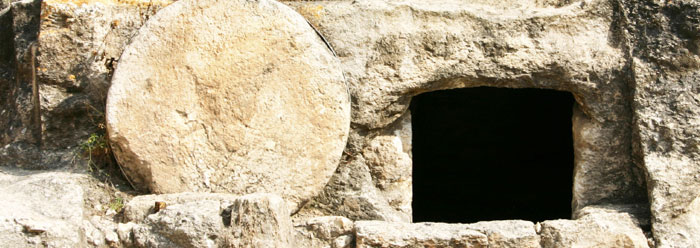
The tomb is empty


On the first day of the week, very early in the morning, the women took the spices they had prepared and went to the tomb. They found the stone rolled away from the tomb, but when they entered, they did not find the body of the Lord Jesus. While they were wondering about this, suddenly two men in clothes that gleamed like lightning stood beside them. In their fright the women bowed down with their faces to the ground, but the men said to them, “Why do you look for the living among the dead? He is not here; he has risen!"
(Luke 24:1-6)

Today I am trying to imagine how the women coming to the tomb (the gospels mention Mary Magdalen and Mary, mother of James, amongst others) would have felt on this morning.
There would have been no joy or anything to look forward to.
I imagine they were driven by a sense of duty to embalm Jesus' body - the only thing left, which they can do for him now.

Then the shock they must have felt when the tomb was empty. Who has taken the body? Now they cannot even perform this rite, which they have come prepared for.

I wonder how long it took for them to comprehend the words the angels told them. He is not here; he has risen!

I can't help but think how often I go about my daily tasks, many of them mundane, without expecting anything amazing, without remembering that God is there with me, without being ready for any surprises he might spring on me. Letting myself be limited by the chores and tasks ahead, without expecting the unexpected ...

He is risen indeed!
May I remember this more often in the future.

Friday, April 2, 2010

Good Friday


Today is the day when Christians remember Jesus' trial and death on the cross.


The churches in our town commemorate this event by a Walk of Witness - a walk through town, with people taking it in turns to carry a large wooden cross and the rest of the congregation following; stopping in places to read from the Bible about Jesus' last hours and praying; followed by a joint service in the town square.


I have always found the Walk of Witness very powerful.

Firstly, it really is a witness of our faith! Walking around with a wooden cross certainly does raise a few eyebrows in this day and age. People stop and stare, and we are noticed!

Secondly, it is one of those opportunities when people from different churches and denominations lay aside their differences and join in the same thing which as members of the Body of Christ all hold dear - following Jesus!

Thirdly, we are reminded that Jesus called us to take up our own cross and to follow him. We should not just watch from afar, but we should get in there and get to work!


Every year I am struck by how difficult it is for us the comprehend how terrible this day must have been 2000 years ago.

We observe Good Friday with the knowledge that Easter Sunday is not far behind, and that there will be joy and hope and the promise of eternal life.


How different it must have been for the disciples!

All must have seemed lost.

Jesus arrested and condemned to death.

Gone! The end!

What about the promise of the new kingdom? The claim of being the way to the Father?

Why can he not save himself?

Was he lying?

Have we been deceived?

Where do we go now?


Perhaps, if we cannot fully comprehend this time of darkness, hopelessness and despair, we cannot really appreciate the miracle and wonder which Easter Sunday brings?


Most of the disciples disappear or watch the crucifixion from a safe distance. Hide. Deny ever having known Jesus.

I wonder where I would be?

Standing at the foot of the cross? Or running away, fearing for my own safety?


Sunday, March 28, 2010

Palm Sunday


Today is Palm Sunday, the first day of Holy Week.


Many Christian denominations remember on this day Jesus' triumphal entry into Jerusalem - in the knowledge that within days events will turn and lead to Jesus' arrest, crucifixion, death and eventually his resurrection. 


"Holy Week is the last week of Lent and the week before Easter. It includes the religious holidays of Palm Sunday, Maundy Thursday (Holy Thursday) and Good Friday, and lasts from Palm Sunday (or in the Eastern, Lazarus Saturday) until but not including Easter Sunday.It commemorates the last week of the earthly life of Jesus Christ before his crucifixion on Good Friday and his resurrection on Easter Sunday."


Although our (secular) society seems to highlight Christmas as the main festival of the year, in the Christian calendar Easter is by far the more important occasion to remember.


Easter represents all Christianity stand for, and I love to spend some time during Lent - as especially Holy Week - to reflect on the enormity of the events which took place 2000 years ago ...


Sunday, March 7, 2010

A New Commandment

"A new command I give you: Love one another. As I have loved you, so you must love one another. By this all men will know that you are my disciples, if you love one another."


(John 13: 34-35)


Thursday, February 18, 2010

Loving others

Jesus instructed his followers with the following two commandments: to love their God and to love their neighbour.

But this is just the shortened version of his command, and sometimes we forget to look at the whole instruction:


Love the Lord your God with all your heart and with all your soul and with all your mind and with all your strength.' The second is this: 'Love your neighbour as yourself.' There is no commandment greater than these." (Mark 12:30-31)


Jesus replied: “‘Love the Lord your God with all your heart and with all your soul and with all your mind.’ This is the first and greatest commandment. And the second is like it: 'Love your neighbour as yourself.' All the Law and the Prophets hang on these two commandments.” (Matthew 22:36-40)


If we are to love our neighbours as ourselves, does that mean that we need to love and respect ourselves first; that unless we love ourselves first, we cannot offer true love and respect to others?


I wonder how often our good deeds towards others turn sour or are done resentfully or grudgingly, if we haven’t taken care of ourselves and loved ourselves first?


It reminded me that I was leafing through a book in a book shop recently, where the current Dalai Lama was asked what it was he did in his role as the Dalai Lama. His reply was “I take care of myself.”


Perhaps I will try to look after myself better, spend time doing what I enjoy and appreciate myself better (all things we often consider to be ‘selfish’) – and see if loving and appreciating others better will follow automatically.

Sounds too simple to be true, really …